Read Me a Story: A Design Review for Small Business Merch
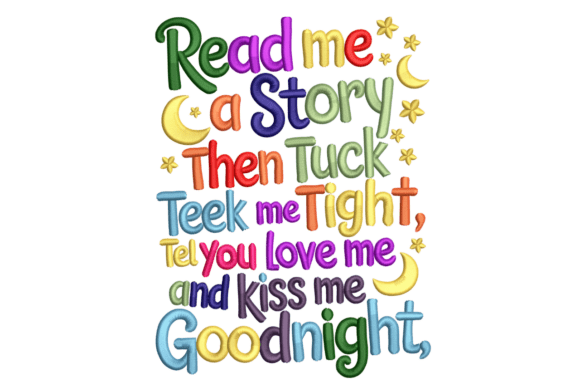
As an embroidery designer who regularly works with brands, boutiques, and creators, my first task with any new file is to evaluate its business potential beyond pure decoration. When I look at the Read Me a Story machine embroidery design, the immediate impression is one of friendly, handmade warmth. The title suggests a narrative, inviting connection. This is a personality-driven design, leaning towards playful and rustic rather than starkly modern or corporate minimalist.
First Impression: Visual Personality for Brand Storytelling
The feel is classic and decorative, evoking a sense of craft and care. For a small business, this is powerful. In a marketplace saturated with generic logos, a design with inherent character like Read Me a Story can help a brand stand out by telling a visual story. It doesn’t scream “professional” in a cold, boardroom sense, but rather “professional” in a trustworthy, artisan sense—which is exactly what many cafes, bakeries, florists, handmade shops, and creative studios want to project.
Real Business Applications for Your Branded Merchandise
Let’s move past the theory and into the practical. Where could you actually use Read Me a Story to enhance your products and brand identity?
Embroidered Patches for Product Labels & Merch
This is a strong candidate for a branded embroidered patch. Patches are incredibly versatile for small businesses. You could sew a Read Me a Story patch onto tote bags as your shop’s mark, onto aprons for staff uniforms, or onto the sleeves of work shirts for a boutique. For a pet brand or nursery-themed business, a patch on a product blanket or accessory adds a premium, handmade touch that elevates the product value.
Uniform & Apparel Accents
Consider it for a chest logo accent on staff polo shirts, or as a smaller sleeve detail. On a cap, it could work as a front design, especially if the business has a storytelling or educational theme. For a café or bookstore, a Read Me a Story embroidery on an apron instantly creates a cohesive, branded look for staff that customers recognize and engage with.
Tote Bags & Customer Gift Items
Tote bags are a staple of small business merchandise. This design, described as perfect for tote bags, would serve as a great primary logo or a complementary decorative element beside your main brand name. It’s also ideal for special event merch or customer gifts—something embroidered that feels personal and thoughtful, reinforcing positive brand association.
Critical Considerations for Commercial Embroidery Success
The description notes the design is easy to stitch and full of personality, which is encouraging. However, “easy” is relative to fabric, setup, and intended use. Here are my professional notes for deploying this digital embroidery file in a business context.
Testing is Non-Negotiable
Always test an embroidery file on real fabric before committing to a production run. For Read Me a Story, I would test it in a simple black thread on white fabric first to check the clarity of the outlines and any detailed elements. This reveals the core structure without color distracting you.
Most critically, test it at the small patch size you intend to use. If you plan a 2-inch patch for a product label, stitch it at 2 inches. Check the spacing between elements; small lettering or tight details can become muddy or lost at reduced sizes. This is vital for cap embroidery and small uniform accents where space is limited.
Fabric, Stabilizer, and Thread Color Contrast
The design’s performance depends heavily on your choice of fabric texture and stabilizer. A sturdy tote bag fabric or a uniform polo shirt material will require different stabilizers than a delicate decorative piece. For dark uniforms or bags, plan your thread color contrast carefully—a light design on dark fabric needs bold, opaque threads to remain visible.
Consider stitch density as well. Designs with higher density can be stiff and may not withstand frequent washing on uniforms as well as lighter designs. If the description doesn’t provide stitch count details, a test on your typical fabric will tell you.
Hoop Size & Commercial Licensing
Confirm the recommended hoop size for the design. Using a too-small hoop can compromise quality. Furthermore, as a business, you must confirm the commercial licensing terms of the embroidery file before using it on products you sell. Not all digital embroidery files come with commercial rights. This is a fundamental step to protect your business.
Where to Use Read Me a Story Carefully
While versatile, some applications require extra attention. On highly curved surfaces like cap fronts, distortion can occur; ensure your test on a curved mockup is satisfactory. Tiny lettering within the design might not translate well to very small patches. Also, on textured fabrics like some bag materials, fine details can get lost, so a simplified, bold version of the design might be more effective.
Impact on Brand Identity & Customer Perception
Implementing Read Me a Story consistently across your merchandise—on aprons, tote bags, patches—builds visual consistency. This repetition builds customer recognition and trust. It signals that your business cares about details and presents a cohesive handmade product aesthetic. For an Etsy seller or craft business, using this as a branding asset on your own product packaging or as a label adds a layer of professionalism that buyers appreciate, directly affecting engagement and perceived value.
Creating Mockups for Client & Customer Approval
Before stitching hundreds of items, create printable mockups. Place the design on digital images of your tote bags, aprons, or shirts. This allows you, or your client, to see how it integrates with other design assets and the overall product. It’s a cheap, fast way to avoid costly production mistakes and ensure the design aligns with your brand identity.
Final Designer Advice for Business Deployment
Read Me a Story holds clear potential for small business merch in the Nursery category and beyond. Its friendly, narrative quality is a brand asset. To leverage it successfully:
- Treat it as a commercial embroidery project from the start: test, confirm licensing, and plan.
- Match it to brands whose identity is playful, artisan, rustic, or story-driven.
- Prioritize its use on items where its handmade presentation boosts product value—tote bags, aprons, branded patches for product labels.
- Be meticulous with small-scale applications and thread contrast on dark fabrics.
- Use it to create a signature look across multiple merchandise touchpoints, from staff uniforms to customer gifts, building a stronger, more recognizable brand.
Ultimately, a design like this is more than a decoration; it’s a tool for visual storytelling and brand building. With the right practical precautions, Read Me a Story can be upgraded from a crafting project to a core part of your small business’s commercial embroidery strategy.