A Gingerbread Kitchen Tools Embroidery Review
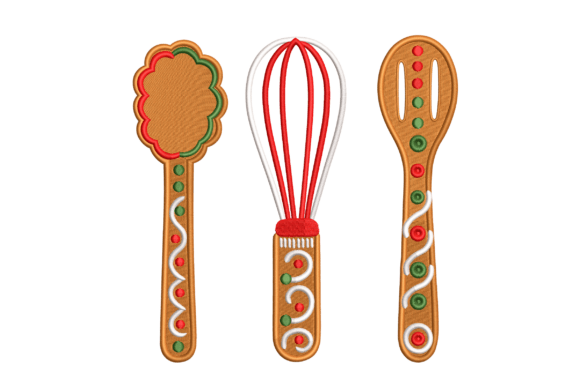
From my studio, prepping for a weekend craft fair, I look at every embroidery file with a practical eye: will it sell at the booth, and is it worth my production time? Today, I’m evaluating the Gingerbread Kitchen Tools machine embroidery design. The title alone paints a picture—it’s decorative, nostalgic, and firmly in the Kitchen Cooking category. My first impression? This feels cute, rustic, and festive. It’s not minimal or modern; it’s a warm, handcrafted design that promises texture and charm.
Where Gingerbread Kitchen Tools Shines on the Booth Table
Imagining my display—totes, aprons, tea towels, patches, caps, pouches, pillow covers—I immediately see this design’s natural home. It’s a theme-driven, decorative accent. Its strength isn’t as a bold focal point on a large tote, but as a perfect embellishment on items that already have a kitchen or homemade feel. A customer walking past will notice it on a tea towel or apron first. It’s understandable at a glance: “Oh, gingerbread tools!” That instant recognition is gold at a busy fair.
For craft fair products, I’d prioritize:
- Tea Towels & Kitchen Towels: The natural fabric and rustic texture make an ideal canvas. It feels giftable.
- Aprons: A small, well-placed embroidery near a pocket or hem adds value without overwhelming the garment.
- Fabric Pouches & Market Bags: For a smaller, reusable kitchen bag, this design becomes a charming feature.
- Embroidered Patches: This could be a standalone sellable patch for crafters to apply themselves.
- Pillow Covers: In a farmhouse-style booth, a small pillow with this design adds to a cohesive collection.
On a cap or a dark fabric tote, I’d be cautious. The whimsical, detailed nature might lose its soft appeal on curved surfaces or without the right fabric contrast.
Production Reality: Making It Work for Your Small Shop
As an embroidery designer producing handmade products in batches, I think about practical execution. The description calls it “decorative” and mentions “texture,” which hints at stitch density. For batch production, you need to assess a few things carefully.
- Stitch Density & Tiny Details: If the design has dense stitch areas or very small lettering (like on the tools themselves), test it on scrap fabric first. High density on a textured tea towel might require a good stabilizer.
- Hoop Size & Scaling: Before running multiple items, confirm the optimal hoop size. Does it work as a small accent (like 4x4) or does it need a larger field to maintain clarity? Scaling down too much could make tiny tools blur.
- Thread Colors & Contrast: This design likely uses a limited, warm palette (browns, creams, maybe red). Test on both light and dark fabrics. On a dark apron, you might need to adjust thread colors for visibility.
- Photographing for Online Sales: For your Etsy listing or printable mockup, this design should photograph well. The textured, handmade feel translates nicely in images, adding perceived value.
My key advice: create at least one real mockup before committing to a production run. Stitch it out on the actual fabric you plan to sell—a kitchen towel, an apron corner. Inspect the stitch density, check for puckering, and review the spacing. This tells you more than any digital preview.
Careful-Use Notes for the Working Designer
Not every design is universal. For Gingerbread Kitchen Tools, keep these in mind:
- On textured towels or linen, use the right stabilizer to preserve detail.
- Small, intricate parts of the design may lose definition if stitched too small.
- It’s likely not a “one-color” design; plan for multiple thread changes.
- For curved surfaces like caps, evaluate a simplified or adapted version.
- Always check the commercial licensing terms of the digital embroidery file before selling finished products.
The Selling Power: Attention, Value, and Booth Cohesion
Ultimately, we’re at the fair to sell. How does Gingerbread Kitchen Tools affect that?
It grabs customer attention through theme and warmth. In a booth full of items, a kitchen-themed section with this design on towels, aprons, and pouches creates a mini-display. It feels consistent. The handmade quality is emphasized by the decorative texture—it looks like something you couldn’t get at a big-box store.
This increases product value. A plain tea towel becomes a specialty item. An apron becomes a personalized gift. For Etsy sellers and boutique makers, it supports a niche—kitchen, holiday, rustic decor.
Your booth display strength grows when you group these products. A customer who loves the gingerbread theme might buy the towel, the pouch, and the patch together. It encourages engagement and conversation. “Are those cookie cutters?” That’s an opening to talk about your work.
For digital sellers of the embroidery file itself, these real-world applications are your best marketing. Show it stitched out on actual products in your listings.
Final Designer Notes Before You Hoop It
My review as a professional ends with preparation. To turn Gingerbread Kitchen Tools into successful craft fair products:
- Test on Scrap Fabric: Use the same material you’ll sell on. Check thread contrast.
- Confirm Hoop Size & File Settings: Don’t assume. Set it up correctly for your machine.
- Inspect Stitch Density: Look for areas that might be too thick for lightweight fabrics.
- Compare Fabric Colors: Stitch it on a light background and a mid-toned one to see the difference.
- Make That Real Mockup: Create one finished, sellable item. This is your booth sample and your quality check.
- Verify Commercial Use: Ensure your license allows you to sell the finished embroidered products at markets and online.
This design has a clear place: on kitchen-centric, giftable, handmade items where its rustic charm is immediately understood. It’s not a universal graphic, but within its niche, it can be a strong, repeatable seller. Approach it with practical production steps, and Gingerbread Kitchen Tools can add genuine beauty and texture—and sales—to your embroidery booth.